
Rust Remover vs. Rust Converter: What's the Difference and Which Should You Use?
When searching for a solution, you've probably come across two common products: rust removers and rust converters.
They might sound similar, but they work differently.
Choosing the right one depends on whether you want to remove the rust or prepare a rusted surface for a protective coating.
Let's explore the differences.
What Is a Rust Remover?
Depending on the formulation, it can dissolve or loosen rust, making it easier to clean the affected metal.
Rust removers are commonly used for:
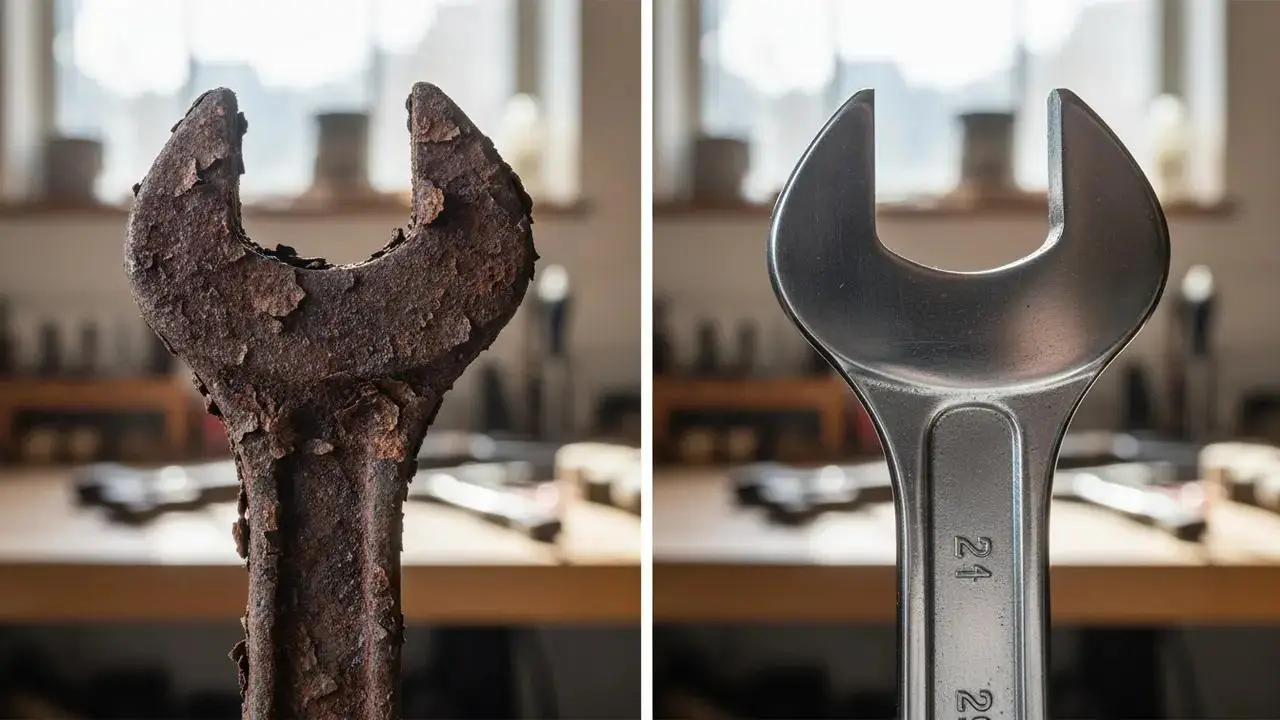
▶ Rusty hand tools and workshop equipment
▶ Metal nuts, bolts, and components
▶ Automotive parts
▶ Suitable industrial machinery components
▶ Metal items being prepared for restoration
The main benefit? A rust remover helps clean the affected metal rather than simply covering the rust.
However, once rust is removed, the exposed metal may need additional protection to prevent corrosion from returning.
What Is a Rust Converter?
Instead of removing rust completely, it reacts chemically with existing rust to create a more stable surface layer.
Many rust converters contain tannic acid, phosphoric acid, or similar ingredients.
They're often used on metal surfaces that will be painted or coated afterwards.
For example, a rust converter may be considered for certain metal fences, gates, or large steel surfaces where complete rust removal is difficult.
However, rust converters aren't suitable for every situation. Thick, loose rust usually needs to be removed first, and some protective coating systems require more thorough surface preparation.
Which One Should You Choose?
- You want to clean rusty metal tools or components.
- You want to restore the appearance of suitable metal items.
- You need to remove rust before further maintenance or treatment.
- You want a cleaner metal surface rather than a converted rust layer.
- The metal surface will be painted afterwards.
- Removing all the tightly attached rust is impractical.
- The planned coating system allows rust converter treatment.
Make Rust Removal Easier with Corsolv DR
Designed for compatible metal surfaces, Corsolv DR helps dissolve rust without relying entirely on time-consuming manual scrubbing.
Its formulation is also described as:
▶ Biodegradable – An option for customers considering environmental impact.
▶ Non-flammable – Helps avoid the flammability hazard associated with some solvent-based products.
▶ Suitable for rust removal applications – Useful for selected household and professional maintenance tasks.
Whether you're cleaning metal tools or maintaining suitable equipment, Corsolv DR can be considered as part of your rust removal routine.
Always check material compatibility, follow the product's directions and apply suitable corrosion protection afterwards.
Final Thoughts: Remove Rust or Convert It?
If you're looking to clean rust off suitable metal surfaces, a rust remover is generally the more appropriate choice.
If you're treating a fixed rusted surface before applying a compatible protective coating, a rust converter may be an option.
The key is choosing the right treatment before rust becomes a bigger problem.
Looking for an effective way to deal with existing rust?
Explore Corsolv DR Rust Remover and discover a solution for your rust removal needs.